Narratives and anecdotes are not only omnipresent in everyday life, they are also found in the sciences, where they fulfill a number of different functions. At the same time, there is relatively little specialist literature on this topic: these types of stories are generally accepted as a matter of course and are not investigated further, even though they not only impart knowledge to us, but can also mislead us. In this yearbook, contributions from a wide array of sciences examine the possibilities and limitations of narratives and anecdotes. The focus is on two topics: on the one hand, the advantages and disadvantages of using these genres in generating and communicating knowledge in the sciences, and on the other hand, their characteristics and functions in literature, economics, politics, and other areas of society. As this volume makes clear, stories—including myths—fulfill a number of important functions; at the same time, caution is advised when dealing with narratives, as they are often considered fact-based and appropriate, but frequently reflect a one-sided view of the world.

Wir leben in einer Welt permanenten Wandels. Der Veränderlichkeit unterworfen ist unser Planet genauso wie die Politik, die Volkswirtschaft, das Klima, das Wetter, die Umwelt oder unser eigenes Leben. Weil sich die Menschen der Ungewissheit bewusst sind, hatten sie seit jeher das Bedürfnis, in die Zukunft zu schauen. Schon in der vorwissenschaftlichen Zeit haben sie Prognosetechniken eingesetzt, die wir heute eher als okkult, esoterisch und nicht verlässlich bewerten. Seit der Aufklärung, der Etablierung der Wissenschaft und wissenschaftlicher Methoden, insbesondere der Statistik, der Wahrscheinlichkeitsrechnung und der Modellierung, sollten wir eigentlich in der Lage sein, von okkulten Prognosetechniken Abschied zu nehmen und unsere Prognosen auf eine verlässliche wissenschaftliche Basis zu stellen. Ob dies gelingt, wird in dem von Michael Wink und Vera Nünning herausgegebenen Heidelberger Jahrbuch 2024 in elf Beiträgen aus den Kultur- und Geisteswissenschaften, den Naturwissenschaften und der Medizin erörtert.
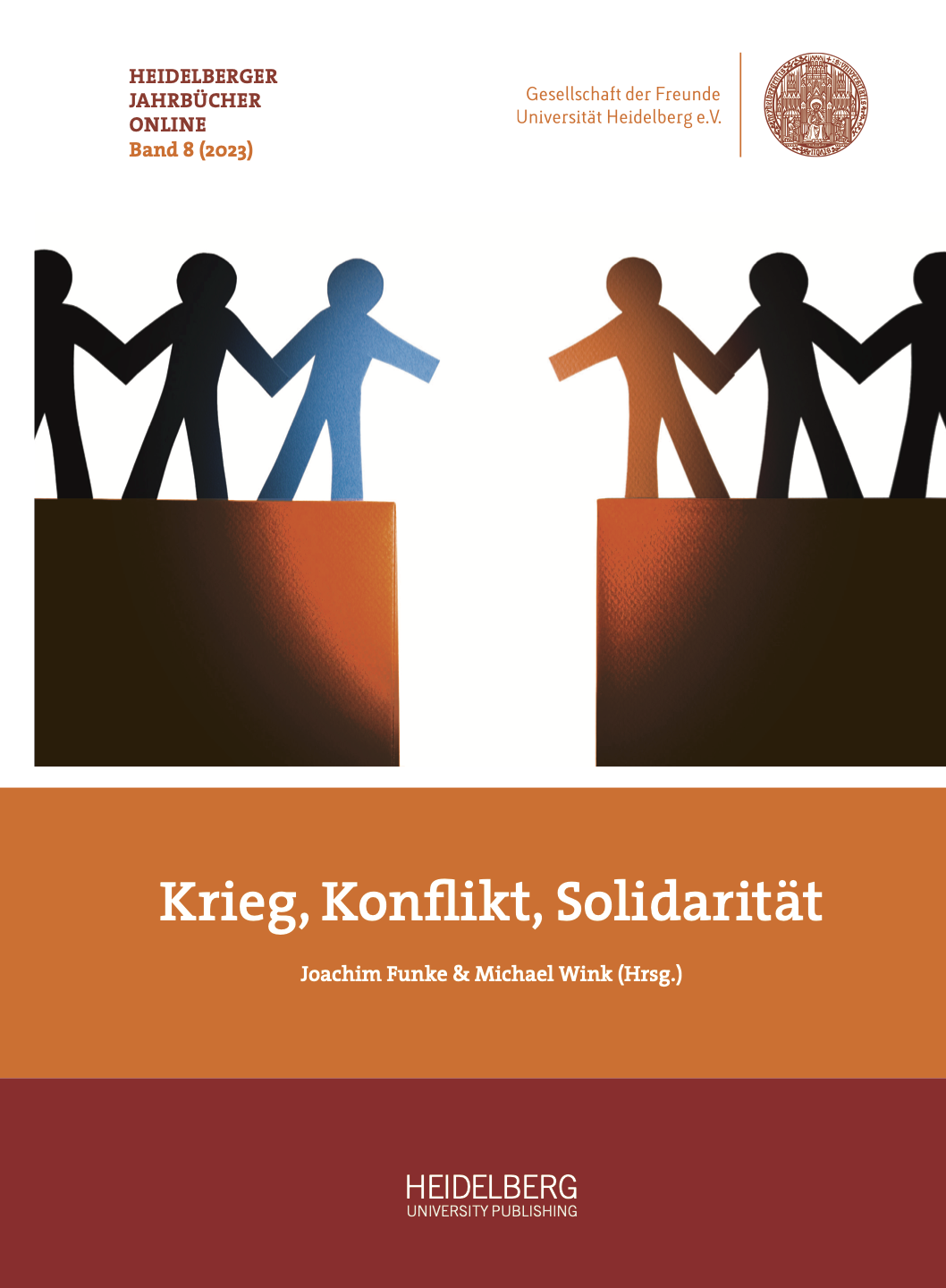
„Krieg, Konflikt, Solidarität“: Drei Stichworte, die die Weltlage beschreiben. Drei Stichworte, von denen die ersten beiden das aggressive Potenzial betonen, das dritte dagegen die prosoziale Seite stark macht. Während Krieg und Konflikt beängstigen, trägt Solidarität als Kraft der Humanität zur Hoffnung bei. Viele Fragen ergeben sich: Ist Krieg wirklich der „Vater aller Dinge“ (Heraklit)? Was bringt Menschen dazu, sich solidarisch zu verhalten? Gibt es „schöpferische Zerstörung“ (Schumpeter)? Wann sind Kompromisse echte Konfliktlösungen? Wie erfolgt die Evolution von Gewalt und Solidarität? Wie lösen Tiere Konflikte? Was beendet Kriege?
In dem von Joachim Funke und Michael Wink herausgegebenen Band behandeln Wissenschaftler:innen aus verschiedenen Disziplinen – Theologie, Biologie, Medizin, Romanistik, Geschichtswissenschaft, Soziologie und Psychologie – das Thema und schildern ihre jeweilige Fachperspektive.
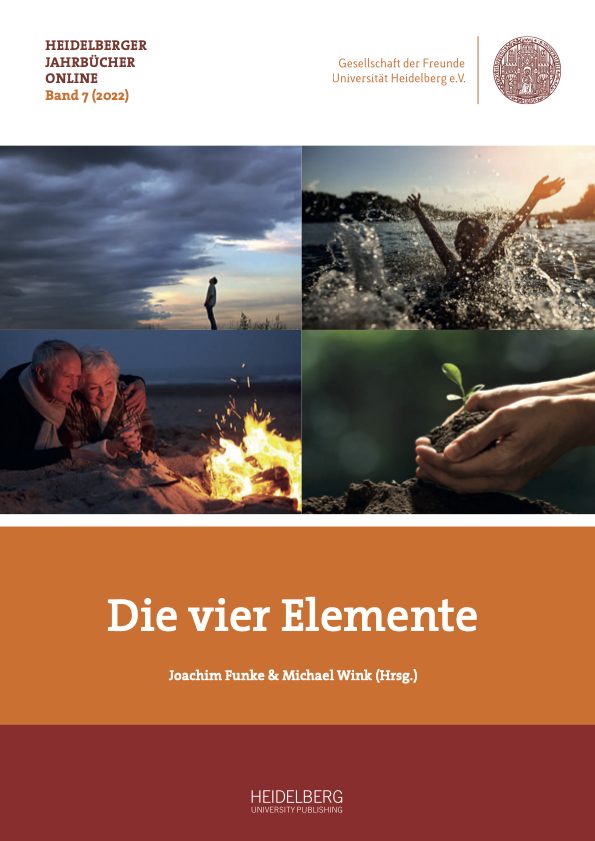
"The four elements": earth, fire, water, and air are on the one hand essential for life, on the other hand they can become life-threatening. Various natural disasters make our dependence on the elements tangible: e.g. we need water to live (drought causes us and other creatures to die of thirst), too much water is also not good (floods). Similarly for fire (we need warmth but fear fires), for air (we need clean air to breathe but fear air pollution), and for earth (we need solid ground under our feet but fear erosion and earthquakes). Hope and fear: times four! In the volume "The Four Elements" edited by Joachim Funke and Michael Wink, scientists from different disciplines – theology, biology, medicine, geology, and psychology – deal with the topic and describe their respective specialist perspectives.
In this volume on "Intelligence" edited by Rainer Matthias Holm-Hadulla, Joachim Funke, and Michael Wink, scientists from various disciplines - from mathematics, biology, medicine, and psychology to culture, economics, and politics - address a variety of current issues and search for interdisciplinary solutions.
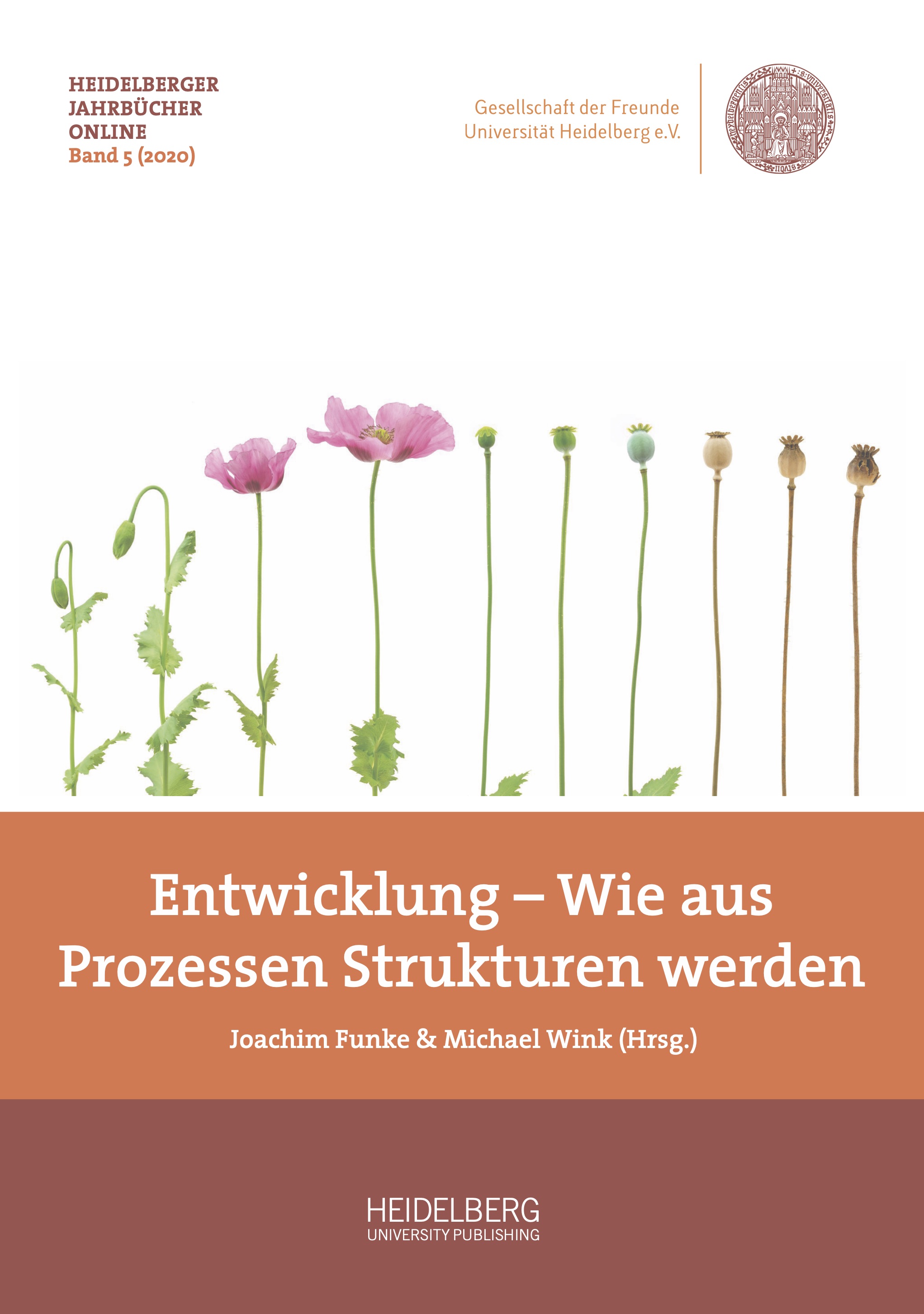
Developmental processes on a small scale (cell growth, ontogenesis) and on a large scale (from the big bang to the universe) that lead to detectable structures: In many areas, astonishing developments are emerging! Be it hypotheses about the origin and creation of the Old Testament, the emergence of all life on this planet from a primordial cell, the emergence of cancer or the formation of human character in the course of ontogenesis. The corona pandemic also shows a typical developmental course.
This volume, edited by Joachim Funke and Michael Wink, examines these topics (and a few more) from the colorful perspective of a full university. Ten authors from the fields of medicine, the humanities, cultural and natural sciences discuss the topic of development from their respective perspectives in eight articles.
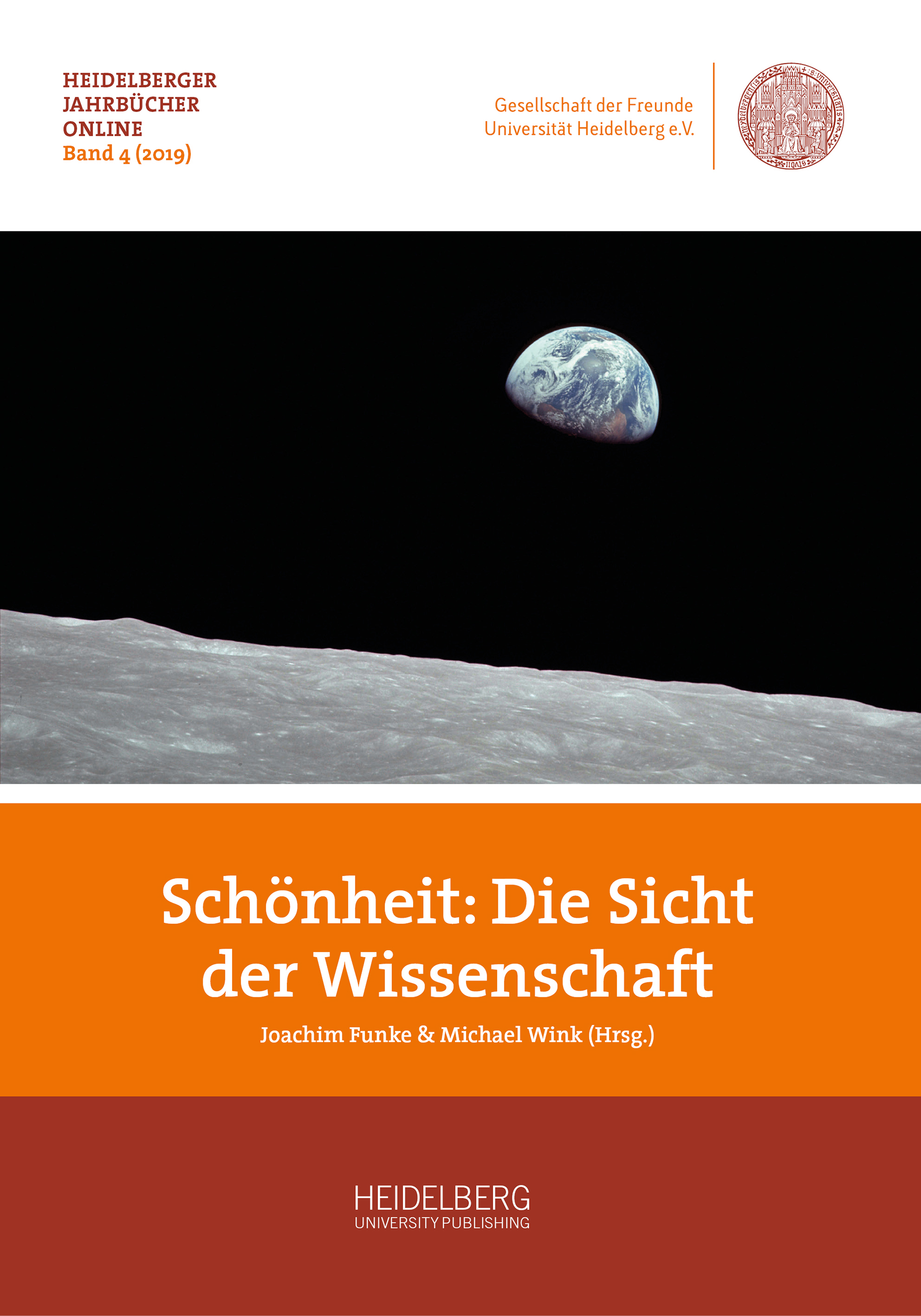
Beauty has been a topic for art and science since antiquity at the latest. Is beauty even a category for the sciences and does an evolutionary basis even exist? Are there beautiful formulas, beautiful theories or beautiful data? And if so: can the concept of beauty be grasped at all in concrete terms in various disciplines? The volume edited by Joachim Funke and Michael Wink sheds light on this topic. A total of nine chapters by twelve authors from medicine, the humanities, cultural studies and the natural sciences discuss the subject from their respective perspectives.
Mobility is a fundamental topic for mankind. It starts with the daily mobility of workers, continues with the recurrent mobility of humans and animals (vacation and travel, bird flight, salmon migration) and ends with the enduring mobility (migration of peoples, plant and animal refugees). Different means of transport (e.g. bicycle, automobile, airplane, elevator, Segway) are in the focus as well as the question, which adaptation possibilities permanent or temporary immobility offers or how increasing immobility in old age can be counteracted e.g. by exoskeletons. The volume "Perspectives on Mobility", edited by Joachim Funke and Michael Wink, illuminates this topic from the colorful perspective of a comprehensive university. Twelve authors from the humanities, cultural studies and natural sciences discuss the topic of mobility from their respective perspectives in eight contributions.
Citizen science is on the rise: In many scientific disciplines, laypeople are taking on tasks such as surveying animals and plants in certain areas or sighting stars. In medicine, self-help groups are collecting and organizing knowledge; in psychology, lay therapy is being discussed. In German studies, editorial activities are carried out by amateurs, and in historical studies, amateurs comb through archives or collect local data. The volume "Science for All: Citizen Science," edited by Michael Wink and Joachim Funke, illuminates this topic from the colorful perspective of a comprehensive university. Ten authors from the humanities, cultural studies, natural sciences and medicine discuss the opportunities and limitations of citizen science from the perspective of university research.

Although change should actually be present to us humans, we rave about stability and secretly assume that the world in which we now live has ceased its changeability. In any case, we react with astonishment and panic when our world changes, for example when volcanoes erupt or the climate changes. But we also view all changes in our political or cultural environment with skepticism, to say the least. Why does the idea of stability or equilibrium play such a large role in our imaginations? The volume "Stability in Change," edited by Michael Wink and Joachim Funke, sheds light on this topic. A total of eight chapters by ten authors from medicine, the humanities, cultural studies and the natural sciences discuss the subject from different perspectives.